Italian Espresso Abroad: A True Story In Taiwan

by Carlo Odello

Trainer and member of the board of the International Institute of Coffee Tasters 

When I arrive in Taipei on Saturday afternoon, the city welcomes me by light rain that is getting heavier. It often rains here in Taiwan. My interpreter Raffaele always jokes about this and tells me that the rainiest city in the country is the one he comes from, which is even worse than Taipei!
When I get to the hotel I’m told that unfortunately I’m too early to check-in. I have to wait: Taipei is like a small Japan and yet they speak Chinese here – however I don’t intend to upset the orderly balance of this island. Raffaele, who apart from the Italian name is one hundred percent Taiwanese, suggests that we go and visit a good friend who has just changed his job. I think it’s a good idea. Three subway stops and twenty minutes later we get there.

The place is new and manages to combine Asian refinement with that modern touch that one can find in similar coffee bars in the United States (everyone knows that the Americans are good at exporting their formats). However, this one is not part of a big chain and it serves up the espresso of a famous Italian brand.

My friend wants me to try the coffee and give her my opinion on it. To say no in Italy would be rude, so never mind in Asia, where good manners are everything. And then again I haven’t had a real coffee in over 24 hours (why do they always serve up that dark broth on the flight?).

After a short wait we are served a cup of coffee of a known Italian brand. The first sip confirms what I had observed from looking at it: it’s under-extracted. It’s watery and bitter in the mouth and the aroma barely reaches my nose. It is well known that this coffee is delicate even when fully extracted, so under-extraction destroys it. The problem is not the quality of the product; you can drink far worse in Italy, as I tell my friend. With her beautiful Asian smile she asks me what I really think of it. And I explain the problem using all the tact that I possess. I do so in technical terms because she is a taster of the International Institute of Coffee Tasters.

She nods in agreement: it is under-extracted and she explains why. Basically, the owner of the coffee bar does not allow anyone to adjust the grinding, as he is probably terrified of the possibility of wasting coffee. In a country where the least that you can expect is rain, getting up to typhoons during the summer, grinding coffee correctly becomes very important.

I think to myself that the issue is not the owner of the bar who imposes this strict diktat. The point is the Italian brand which should probably check up more on what goes on in the bars that serve up its coffee. Business is business, but not checking what customers are doing in a turbulent market such as the Taiwanese market means that you stoop to the mediocre quality offered by the American and Japanese chains that are popping up everywhere on the island.

The good news is that meanwhile it has stopped raining and I can take up the road towards the hotel. The under-extracted coffee has given me a coup de grace: I’m totally ready to enjoy the comfort of my room now.

Italian Espresso tasting course just before the Host show in Milan (20 October 2011)

by Carlo Odello *

We just scheduled an Espresso Italiano Tasting course just the day before the Host show in Milan (20 October 2011). Many professionals wrote us asking about this course: here it is! The course will take place in Brescia, hometown to the International Institute of Coffee Tasters. This means just 1,5 hours fom the Host show in Milan.

Why should you attend an Espresso Italiano Tasting course? I can think of many good reasons, but one seems to me the most important: to go back to the roots of Espresso, to understand the culture in which it was born.

I have been working in the coffee business for some years (not counting the years I was at the university but already spent some time at the events of the International Institute of Coffee Tasters and of the Italian Espresso National Institute). And I have been travelling around the world in the last few years training people how to taste Italian Espresso.

What did I discover? Easy to say: coffee is culture, means it is strongly connected to real life. It is like Chinese tea: you cannot understand it unless a Chinese explains it to you. That’s because he or she is Chinese and was born and raisen up in the real Chinese tea culture. The same for Japanese tea. And for any other specific tea culture.

Let us make you discover the real Italian Espresso culture. If you are interested in understanding how to recognize and evaluate the real Italian Espresso, just download the brochure from the link below. You can also drop me an email at carlo.odello@italiantasters.com if you need further information about the course.

Download:

Italian Espresso Tasting course: brochure (PDF)

* Trainer and member of the board of the International Institute of Coffee Tasters

Italian Espresso in China: new book and new courses

 Espresso Italiano Tasting Chinese

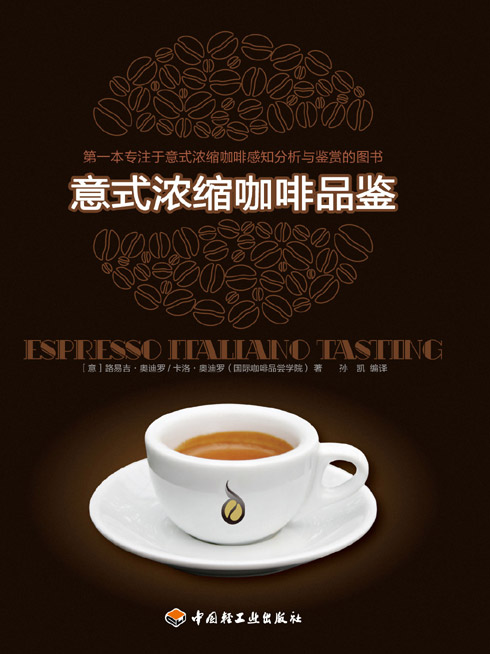
Espresso Italiano Tasting, the official handbook of the International Institute of Coffee Tasters, has just been published in Chinese. And more courses and seminars on tasting Italian Espresso are coming in Guangzhou next week (July 26th-31st). The classes will be held by Carlo Odello, member of the board of the International Institute of Coffee Tasters. For  more information about the courses and the book please contact Ms Jolin (jolin@acoffee.cn).

The return of the blend: for love or for money?

by Carlo Odello *

The blend seems to be regaining ground in several countries where for many years the espresso has been seen as a single origin product. We are actually receiving signs of interest in the blend from the United States, and the same can be said for Japan.

This situation often leads to a double interpretation. Some rejoice saying that the rediscovery of the blend is a clear sign of more complex aromatic research. Others however, perhaps the more pessimistic, see it from a different light: the carefully selected single origins, particularly some washed Central American origins, have become very expensive in their pure form. Laws: the profit margin has fallen drastically compared to the past.

However the fact remains that for money or for love, the blend seems to catch on again. Not a bad thing for the Italian espresso which has always cherished the blend.

* Trainer and member of the board of the International Institute of Coffee Tasters

Caffè Italia, the Italian Espresso event at Foodex 2011, Tokyo

The International Institute of Coffee Tasters will organize a new edition of Caffè Italia, the Italian Espresso event, at Foodex 2011, the most important food exhibition in Japan (Tokyo, Makuhari Messe, Hall 3, booth C01, March 1-4).

The second edition of Caffè Italia will give visitors the opportunity of tasting six different Italian Espresso blends and evaluate them. For the first time visitors will have to judge the espresso blends using a tasting card. Caffè Italia will also host training sessions held by Chihiro Yokoyama.

Carlo Odello, member of the board of the International Institute of Coffee Tasters and communications manager of the Italian Espresso National Institute, will be at Caffè Italia, too. "We aim at spreading the culture of the real Italian Espresso and Caffè Italia is a great opportunity for us – Mr Odello said – Japan proved to be very sensitive to Italian Espresso, we now have more than 300 tasters in the country. We recently launched the Espresso Italiano Tasting classes in China and are looking for partners in other Asian countries such as Korea and Thailand".

Caffè is organized in cooperation with the International Institute of Coffee Tasters – Japan, the Italian Espresso National Institute and the Italian Trade Commission.

For more information: info@coffeetasters.jp, carlo.odello@italiantasters.com.

Caffè Italia: an Italian espresso in New York

The 56th Fancy Food Show edition opens in New York on the 27th of June. Throughout the entire exhibition, that closes on the 29th of June, visitors can enjoy Caffè Italia in the area of the Italian Trade Commission (ICE), booths # 2704-18 / 2805-13 / 2817-19 at the Javits Convention Center.

The Italian Espresso National Institute, in collaboration with the Italian Trade Commission (ICE) and the sponsorship of the International Institute of Coffee Tasters, will offer to visitors seven coffee blends of different Italian regions. Torrefazione Saturno, La Genovese, Filicori and Zecchini, Mokarico, Caffen, Zicaffè and Torrefazione Paranà have joined Caffè Italia.

The Fancy Food Show is one of the most important North American food industry exhibitions. The last edition registered 24 thousand visitors that evaluated 180 thousand products of every kind brought by over 2,500 exhibitors of 81 nations.

Coffee Experience wants you: we are looking for baristas!

Do you want to be a member of the staff of Coffee Experience 2010? Two professional espresso machines, 30 coffee grinders, coffee in beans and pods: more than 7,000 coffees to be served in five days.

If you want to join our staff as a barista, please write to carlo.odello@italiantasters.com. Coffee Experience will cover your accomodation in Italy.

Coffee Experience 2010, Verona, Aprile 8-12: the largest coffee tasting event in the world.

Italian Espresso and North America: let’s re-open the game

by Carlo Odello *

From Portland to Vancouver, via Seattle. Three cities, three states, two nations. But one great love for the quality of life and fine food. A love that express itself in a choice of high-level restaurants, expression of the diverse world cuisines that meet in this cities. A passion that involves the wine too, with its continued holding of more or less mundane events that bring in these cities the best producers worldwide.

And a visceral love for coffee. A fervent activity which is reflected in thousands of coffee shops, owned by the most important chains or independent. Yes, indeed: the independent ones, run by entrepreneurs who, in total financial autonomy, have decided to make coffee their business. And in many cases almost a reason for living. People that welcome you in the coffee shop with a pride and an enthusiasm that leaves you amazed.

Baristas who are not there by chance, people who made a precise choice and who prepared themselves for this. People ready to pull out a few thousand dollars to learn how to make a business plan for their shop, to understand how to manage it from a financial point of view, to develop a marketing that will give them a possibility more with respect to the fierce competition. Baristas who treat their equipment as objects of a liturgy: difficult to find a dirty machine, the metal always shines, the hoppers of the grinders are impeccable.

In any case there is something that leaves you a little confused. Because if it is true that the bow must be well tended if you want the arrow to go far, it is equally true that you must take a good sight. In most coffee shops you have the impression that the search for the perfection has led to a race in which who fills the filter the most wins. If you do not specify that you want a single espresso you will nearly always have a double, even triple one, considering that it is extracted from 20 grams of ground coffee. The feeling, as some Canadian friends confirm, is that they have misunderstood the concept of espresso: it has to be powerful, but someone said that power is nothing without control. Certainly, most of the cups go into cappuccinos, lattes and other beverages.

Yet, well begun is half done. And then, let’s start again, we said in the International Institute of Coffee Tasters. Well, we said, let’s see if we can bring the word of Italian espresso in such a complicated context. So we took the occasion of the invitation by Caffè Umbria, which for years has been working only with the Italian standard. So with the help of Pasquale Madeddu, Emanuele Bizzarri and Jesse Sweeney the first two Espresso Italiano Tasting courses were born. For the first time we went overseas, more precisely in Vancouver and Portland.

Our impression? At first a little difficulty by the participants to understand exactly the Italian standard, but at the end of the course, satisfaction on their part for the experience. It was helpful to them to hear the voice of Italy and they have finally taken the right measures of what is truly an Italian espresso. That’s the beauty of America: it is the land of opportunities. You just need to know how to catch them. The door is now open and some strange ideas about espresso have been eradicated, at least in the minds of our first students.

* Trainer and member of the board of the International Institute of Coffee Tasters

Schultz, Starbucks CEO: Italian baristas are very good, Italian coffee is awful

Howard Schultz, Starbucks CEO, was in Italy with a group of partners to study the coffee market in the country. In the last months he has been working on the repositioning of Starbucks, trying to face the threats coming from aggressive competitors as McDonald’s. Coffee Taster republishes the letter from Howard Schultz.

* * * *

Dear Partners,

As I write you this note, I’m flying back to Seattle with a small group of Starbucks partners after spending a few days in Italy. No, we were not there to open our first store in Rome, although I’m quite certain that day will surely come. We were there to conduct a market visit to take in “all things coffee,” and to have strategic discussions with leading food and beverage companies.

We tasted and consumed coffee in every coffee bar we encountered. We saw elegant designs, experienced the artistry of baristas, ate fantastic food, and were introduced to new and interesting product ideas for the future. It was exciting for me to, once again, return to where it all began. The Italian people are wonderful. Their passion for life, their love of food and wine, and their coffee, is contagious.

During our visit, I made the following observations:

The Barista — The Barista is highly trained and very skilled. He presents each cup of espresso with great care and pride after intently watching the pour of the shot. He steams the milk as an artisan to produce a velvety foam, and from time to time, truly elevates his work to “art.”

The Coffee — This will probably surprise you (and hopefully you will not view my assessment as arrogant, but rather as honest), but the coffee was not that good. It turns out that most Italian coffee roasters blend their coffee with robusta beans. This is most likely because of a need for increased profit, but as a result of this decision, much is lost in the cup. The coffee leaves you with a strong, acidic, somewhat sour taste on the side of your tongue. This taste was unpleasant and disagreeable, but prominent in almost all the coffee we tasted.

Despite the change in the taste of the coffee, the experience we had was overwhelmingly positive on both a personal and professional level. We all felt a strong sense of pride in our company and in all of you. For many years now, we have been a respectful inheritor of the Italian coffee culture. We have built our business honoring the very things we saw and experienced. And, in some cases, I am humbled to say, we have improved it.

All of you deliver a world class experience to our customers — one that I believe Italians would praise. We have challenges and opportunities ahead of us, but as long as we embrace our heritage and tradition, have faith in our coffee, our values, and our core purpose, we will continue to win the hearts and minds of our customers. As for the coffee, we never have and never will blend our coffee with robusta beans. We will leave that for others. It is important to note that today; we ethically source higher quality arabica coffee than in any other time in our history. And, in my view, we roast it at a quality level that is better than in the past because of new technology.

So, this trip brought me back to where it all began, but at the same time reinforced how good we are and how far we have come. We learned a lot. And, we will utilize much of this learning to keep pushing for innovation, while at the same time embracing our core, our people, and our coffee. All of which I am proud to say would stand tall even in the greatest coffee theatre of them all.

Thank you for all that you do.

Onward,

Howard